September 2026
Dredging and Reclamation Workshop
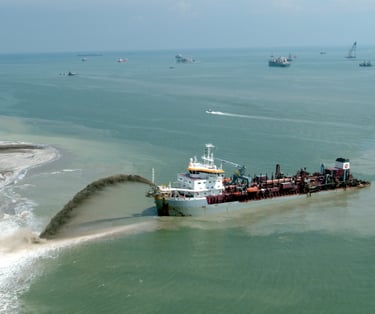
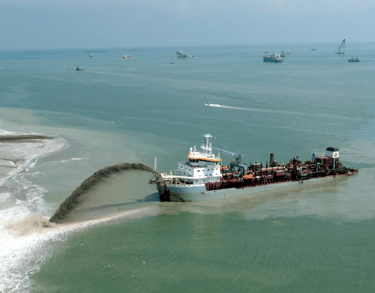
This Dredging and Reclamation Workshop is necessary to create and maintain navigation channels for the nation’s ports, harbours, marinas, and naval facilities. Billions of cubic yards of sediment are dredged each year worldwide. Managing and regulating the disposal of dredged sediment is a shared responsibility of all stakeholders. Dredging is often a key part of coastal infrastructure projects.
Course Content
Introduction to dredging Management
Understanding Dredging terminology.
Types of dredging equipment.
Planning and design of dredging works
Modelling of dredging operations.
Important environmental aspects to consider during dredging.
Procedures and consent requirements
Identifying key stakeholders
Coordination and Environmental monitoring of the dredging operations.
Dredging contract types Dredging optimisation.
Dredging Project implementation and Risk management.
Disputes avoidance in Dredging Projects.
Learning Outcomes
The dredger types, including key terms and how they operate within their scope;
Planning, Coordinating, managing and monitoring dredging to eliminate the cost and minimise risks;
Address Site Assessment and Material Characterization, Environmental Considerations and Legal and Regulatory Frameworks;
Master Project Planning and Management and Foster Safety and Operational Best Practices;
Be able to undertake dredging, including detailed explanations of the different type’s stages/components of a dredging project;
Its impact on the environment, management, mitigation and monitoring of the project or activity;
The standard types of dredging contracts, the key principles to consider when preparing a contract, and how to minimise the risk of claims.
📅Date
21 – 24 September 2026
⏰ Time
9:00 am – 4:00pm
💷 Cost £3,700.00
📍Location London, United Kingdom
💼 Category Logistics, Marine Engineering and Specialist Programme
Port Planning & Implementation
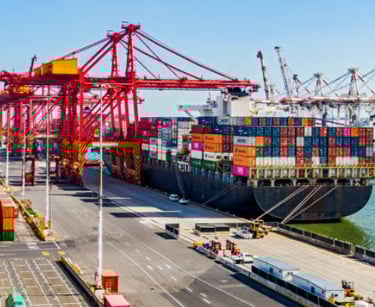
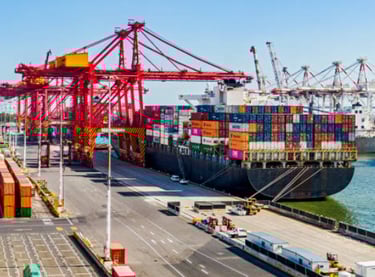
This workshop will provide practical Port Planning guidelines to support ports in accomplishing their strategies and, more importantly, managing them for maximum and efficient usage. Ports will undoubtedly face some tough challenges in an ever more competitive environment.
Planning will help ensure that the port continues to provide the highest quality service for domestic and international traffic and import and export cargo.
Course Content
The Port Strategic Planning process
The Development Policy
Corporate Social Responsibility
Port Efficiency & Competitivity
Prevention of road congestion
Locating an inland container depot
Hinterland Connectivity and strategy: infrastructure and multimodal connectivity
Learning Outcomes
Participants will learn about the key Strategic planning process, security and safety measures of ports.
Participants will thoroughly understand how to create harmony between the environment and port development.
Participants will understand the importance of maximising utilisation of the Potential Bay and value-added logistics for efficient supply chain management.
📅Date
14 – 18 September 2026
⏰ Time
9:00 am – 4:00pm
💷 Cost £3,600.00
📍Location London, United Kingdom
💼 Category Logistics, Marine Engineering and Specialist Programme
October 2026
Skills Facilitation for Technical Professionals
Effective communication and collaboration are essential for technical professionals in today’s dynamic and interdisciplinary environments. This course is specifically designed to equip technical professionals with the foundational skills and techniques necessary to facilitate meetings, workshops, and discussions effectively. Through interactive exercises, role-plays, and practical examples, participants will learn how to lead productive and engaging sessions that promote collaboration, problem-solving, and decision-making.
Learning Outcomes
Understanding Innovation: Defining innovation and its significance in business success.
Types of Innovation: Exploring different forms of innovation, including product, process, and business model innovation.
Innovation Management: Strategies for fostering a culture of innovation within organizations and managing the innovation process effectively.
Design Thinking: Introduction to design thinking methodologies and their application in problem-solving and idea generation.
Open Innovation: Leveraging external partnerships and collaboration to drive innovation.
Disruptive Innovation: Identifying and responding to disruptive forces in the market.
Sustainable Innovation: Incorporating environmental and social considerations into innovation strategies.
Innovation Metrics: Measuring the impact and effectiveness of innovation initiatives.
Innovation Leadership: Characteristics and practices of effective innovation leaders.
Future Trends in Innovation: Emerging technologies and trends shaping the future of innovation.


📅Date
12 – 16 October 2026
⏰ Time
9:00 am – 4:00pm
💷 Cost
£3,200.00
📍Location
Istanbul, Turkey
💼 Category
Logistics, Business Models, Design Thinking and Specialist Programme
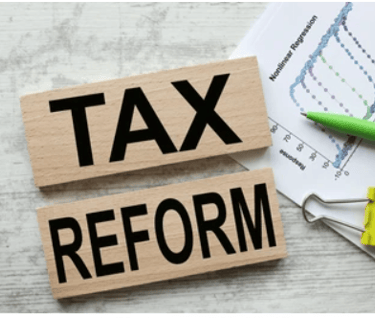
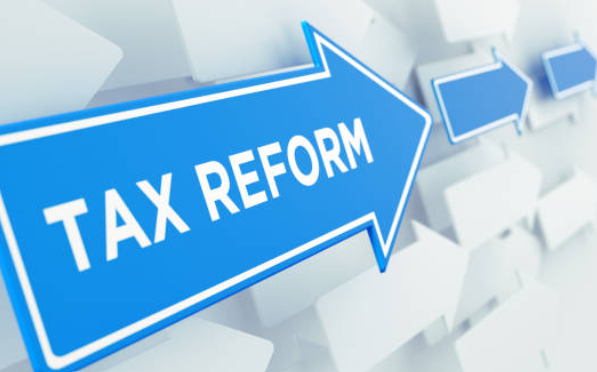
Managing Systemic Change Through Tax Reforms
This workshop is designed to equip senior leaders with the strategic, political, and organisational capabilities required to design, lead, and embed major tax reforms. It helps executives navigate political complexities, leverage economic intelligence, communicate reform vision, and drive system-wide change that improves compliance, fairness, and national revenue performance.
Course Content
Strategic Reform Leadership;
The Architecture of Tax Reform: Global best practice;
Stakeholder Governance & Business Acumen;
Cross-government alignment and Stakeholder diplomacy: engaging businesses, civil society, taxpayers;
Change leadership frameworks for tax administrators, while managing resistance at all levels of the organisation and workforce transformation and capacity-building.
Operational Integration & Implementation Excellence;
Designing reform implementation roadmaps. Monitoring, evaluation & learning systems for reform sustainability.
Learning Outcomes
Specifically, it prepares senior leaders and executives to:
Lead tax-reform agendas with confidence, using data-driven, economic, and organisational intelligence for politically informed decision-making.
Anticipate and navigate resistance, manage complex political dynamics and stakeholder expectations, and build cross-government alignment.
Use financial, economic, and organisational intelligence to make high-stakes decisions.
Communicate reform effectively to internal teams, taxpayers, and political leaders.
Implement governance structures accountability and ensure reforms increase revenue, fairness, compliance, and fiscal sustainability.
Mobilise entire workforces behind reform goals.
Drive behavioural and cultural change within tax organisations.
📅Date
19 – 23 October 2026
⏰ Time
9:00 am – 4:00pm
💷 Cost £3,700.00
📍Location London, United Kingdom
💼 Category
Tax, Reforms, Change Management, Leadership, Specialist Programme
November 2026
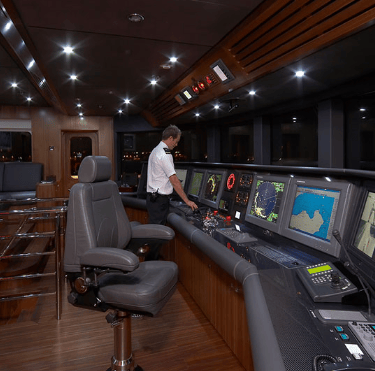
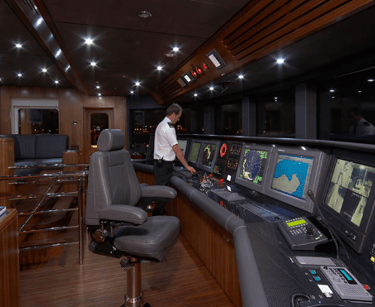
Artificial Intelligence for Smart Ship Operations and Marine Engineering Systems
Introduction
The maritime sector is currently navigating a dual-speed digital transformation. The focus has shifted toward "Agentic AI" and the "Future of Work," where AI agents manage complex shipboard workflows and digital marine ecosystems. These regions are moving toward high-autonomy "Remote-First" diagnostic hubs that allow for global talent access regardless of HQ location, fundamentally changing the traditional hierarchy of the engine room.
Emerging economies are leveraging AI to leapfrog legacy infrastructure, using smart vessel operations to optimize aging fleets and reduce the "flexibility tax" associated with remote regional trade. For these nations, AI is not just an efficiency tool but a critical mechanism for "Stagility", maintaining operational stability while remaining flexible enough to compete in global "Green Corridors." This course bridges these two realities, providing a strategic framework for smart vessel management.
For senior maritime managers, understanding the architecture of a "Smart Ship" is no longer a technical option; it is a core business strategy. As the industry settles into a "3-2" hybrid model (3 days in-office, 2 days remote for shore-based teams), the ability to oversee digital marine engineering ecosystems through outcomes-based performance metrics is essential. This course prepares leaders to manage the intersection of human talent and AI capability across diverse geographic and economic landscapes.
Learning Outcomes
Design organizational structures that support "Stagility" in smart vessel operations.
Implement digital marine engineering ecosystems that leverage global remote diagnostic hubs.
Formulate "Outcome-Based" KPIs to measure AI agent efficiency versus manual labour.
Evaluate the impact of proximity bias in hybrid ship-to-shore command centers.
Lead the cultural transition of engineering teams into AI-augmented roles.
Develop a strategic roadmap for "Visibility Equity" across distributed monitoring teams.
Learning Objectives
Understand AI fundamentals within the context of Atkinson’s "Flexible Firm" model.
Analyse smart ship system architectures using Stanford’s Guide to Organisation Design.
Evaluate digital transformation pathways that prioritize cybersecurity for smart operations.
Identify AI architectures suitable for vessels with limited bandwidth in emerging markets.
Assess how AI can automate "Innovation Sprints" within marine engineering workflows.
Synthesize labour data to predict future maritime skills requirements in a hybrid world.
📅Date
9 – 13 November 2026
⏰ Time
9:00 am – 4:00pm
💷 Cost
£3,700.00
📍Location
London, United Kingdom
💼 Category
Artificial Intelligence, Marine Engineering, Logistics, Specialist Programme
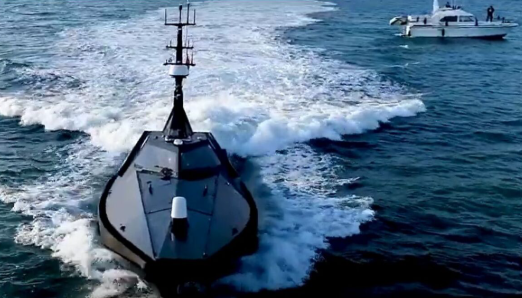
Autonomous and Semi-Autonomous Marine Vessels: Engineering Systems & AI Control
Introduction
The transition from human-led command to AI-assisted navigation is perhaps the most disruptive shift in maritime history. The focus is on Level 4 autonomy for short-sea shipping and "Blue Highways," where labour shortages and the high cost of crew drive the demand for unmanned operations.
In emerging economies, autonomous technology is often applied in a semi-autonomous capacity to enhance safety and bridge the skills gap in rapidly expanding maritime sectors. Here, AI acts as a "safety co-pilot," assisting less experienced crews in navigating complex, congested waterways. This course examines the control architectures and AI navigation models that make these levels of autonomy possible.
The challenge in autonomous shipping is not just technical but regulatory and ethical. As we move toward a world where AI makes split-second collision avoidance decisions, leaders must understand algorithmic accountability.
Learning Outcomes
Understand AI control frameworks for safe navigation in congested waters.
Assess regulatory and liability challenges of autonomous systems across jurisdictions.
Implement AI-based collision avoidance systems that are COLREGs-compliant.
Develop remote-operator "Psychological Safety" protocols for navigation.
Design redundant engineering systems for unmanned or reduced-crew engine rooms.
Evaluate the cost-benefit of autonomous vs. crewed operations for regional trade.
Learning Objectives
Analyse autonomous vessel architectures, focusing on fail-safe AI loops.
Evaluate AI navigation models against real-world maritime safety data.
Assess safety and regulatory challenges in alignment with IMO and WEF standards.
Differentiate between the four levels of maritime autonomy.
Simulate an AI response to a sensor failure in a semi-autonomous ship.
Explain the ethical implications of autonomous decision-making in emergencies.
📅Date
16– 20 November 2026
⏰ Time
9:00 am – 4:00pm
💷 Cost
£3,700.00
📍Location
London, United Kingdom
💼 Category
Artificial Intelligence, Marine Engineering, Logistics, Specialist Programme


Regulation, Ethics, and Classification Standards for AI in Marine Engineering
Introduction
AI technology is currently outpacing maritime law. The focus is now on "Responsible AI", ensuring that algorithms are transparent, fair, and accountable. A number of regions are actively participating in the creation of EU AI Act-aligned standards and IMO guidelines for autonomous ships, emphasizing that AI must serve the public good and environmental safety.
In emerging economies, the regulatory focus is often on "Sovereignty and Compliance." These nations want to ensure that AI-driven vessels entering their waters meet international classification standards (like DNV or Lloyd's Register) without compromising local labour laws or security. This course explores how to navigate this fragmented legal landscape, ensuring that AI implementations are both "Trustworthy" and compliant.
The task is to move beyond "Compliance" and into "Ethical Governance." Managers will learn how to set up "Ethics Committees" to vet new AI projects, ensuring they don't contain algorithmic bias that could lead to unfair hiring or discriminatory port-arrival scheduling. This course provides the moral and legal "compass".
Learning Outcomes
Apply regulatory and ethical frameworks to ensure the "Responsible Use of AI" in marine systems.
Interpret IMO, ISO, and classification society standards for AI-enabled vessels.
Implement ethical AI governance that avoids algorithmic bias in safety or operations.
Design "Compliance Dashboards" for multi-jurisdictional maritime operations.
Evaluate the legal and liability implications of AI-driven engineering decisions.
Lead corporate "Ethics Committees" for maritime AI project approvals and oversight.
Learning Objectives
Interpret classification society standards (e.g., DNV, Lloyd's) for smart ship certification.
Apply ethical AI governance frameworks to ensure transparency and accountability.
Assess compliance and assurance models for autonomous and semi-autonomous systems.
Differentiate between "Hard Law" (Regulations) and "Soft Law" (Ethical Guidelines).
Explain the "Black Box" problem in AI decision-making to non-technical stakeholders.
Analyze the role of AI in Environmental, Social, and Governance (ESG) reporting for investors.
📅Date
23– 27 November 2026
⏰ Time
9:00 am – 4:00pm
💷 Cost
£3,700.00
📍Location
London, United Kingdom
💼 Category
Artificial Intelligence, Ethics, Governance, Marine Engineering, Logistics, Specialist Programme
December 2026
Change Transformation & Taxpayer Reforms Workshop
This workshop equips senior leaders with the tools to redesign taxpayer experiences, implement digital transformation, influence taxpayer behaviour, optimise operational efficiency, and apply financial and commercial insight to decision-making. It is designed to create leaders capable of driving sustainable change, improving revenue mobilisation, and building modern, citizen-centred tax systems.
Course Content
Business Acumen & Strategic Thinking for Tax Administrations;
Business models, value creation, and cost structures and financial intelligence for tax leaders;
Taxpayer Experience Transformation & Behavioural Insights;
Innovation, Operational Excellence & Performance;
Digital identity, data governance, cybersecurity, omnichannel service delivery (mobile, chatbots, web portals) and operational excellence & performance leadership;
Leading Change, Culture Transformation & Implementation Roadmaps;
The psychology of organisational resistance, creating transformation roadmaps, monitoring, evaluation and governance models for long-term sustainability.
Learning Outcomes
Specifically, it prepares senior leaders and executives to:
Understanding business models, financial analysis, ROI, and cost-to-serve
Using data to make evidence-based strategic decisions
Applying commercial logic to tax administration strategy
Managing resistance and complex stakeholder environments
Embedding new ways of working across multiple departments
Improving taxpayer trust, compliance, and voluntary participation
Aligning transformation with national fiscal goals.
📅Date
07 – 11 December 2026
⏰ Time
9:00 am – 4:00pm
💷 Cost £3,100.00
📍Location
Istanbul, Turkey
💼 Category Reforms, Tax, Change Management, Leadership, Specialist Programme
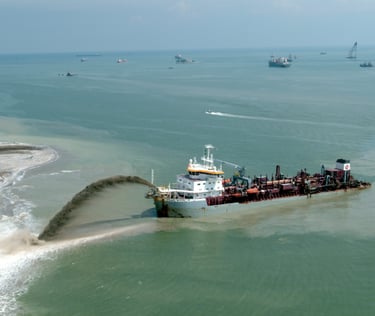
Dredging and Reclamation Workshop
This Dredging and Reclamation Workshop is necessary to create and maintain navigation channels for the nation’s ports, harbours, marinas, and naval facilities. Billions of cubic yards of sediment are dredged each year worldwide. Managing and regulating the disposal of dredged sediment is a shared responsibility of all stakeholders. Dredging is often a key part of coastal infrastructure projects.
Course Content
Introduction to dredging Management
Understanding Dredging terminology.
Types of dredging equipment.
Planning and design of dredging works
Modelling of dredging operations.
Important environmental aspects to consider during dredging.
Procedures and consent requirements
Identifying key stakeholders
Coordination and Environmental monitoring of the dredging operations.
Dredging contract types Dredging optimisation.
Dredging Project implementation and Risk management.
Disputes avoidance in Dredging Projects.
Learning Outcomes
The dredger types, including key terms and how they operate within their scope;
Planning, Coordinating, managing and monitoring dredging to eliminate the cost and minimise risks;
Address Site Assessment and Material Characterization, Environmental Considerations and Legal and Regulatory Frameworks;
Master Project Planning and Management and Foster Safety and Operational Best Practices;
Be able to undertake dredging, including detailed explanations of the different type’s stages/components of a dredging project;
Its impact on the environment, management, mitigation and monitoring of the project or activity;
The standard types of dredging contracts, the key principles to consider when preparing a contract, and how to minimise the risk of claims.
📅Date
07 – 11 December 2026
⏰ Time
9:00 am – 4:00pm
💷 Cost £3,600.00
📍Location London, United Kingdom
💼 Category Logistics, Marine Engineering and Specialist Programme
If you have any questions or enquiries, please feel free to contact us
CONTACT US
admin@stirlingdc.co.uk
+44 (0) 2475227120
+44 755 310 9756
2024. All rights reserved.
Registered under the Companies Act 2006 in England & Wales. Company Reg No: 16842948
Opening Hours: Monday to Saturday: 9am to 5pm